
Case Study: Pulborough Property Saved From Rising and Penetrating Damp

A homeowner in Pulborough contacted us after noticing damp patches and blistering paintwork on several ground floor walls, along with cold, stained areas on an external-facing wall. These symptoms suggested a combination of rising damp from ground level and penetrating damp caused by weather exposure and defects in the external fabric of the building.

Inspection and Diagnosis
Gavin carried out a detailed damp survey, including moisture readings at different heights, visual inspection of external walls, and checks around gutters, pointing and external ground levels. The pattern of readings confirmed classic rising damp to several internal walls, with separate signs of penetrating damp on a weather‑exposed flank wall.
Externally, Gavin identified porous masonry and deteriorated pointing as key contributors to water ingress on the flank wall. Internally, older plaster had become contaminated with hygroscopic salts, which would continue to attract moisture if not removed and treated.
Damp Proofing and Repair Work
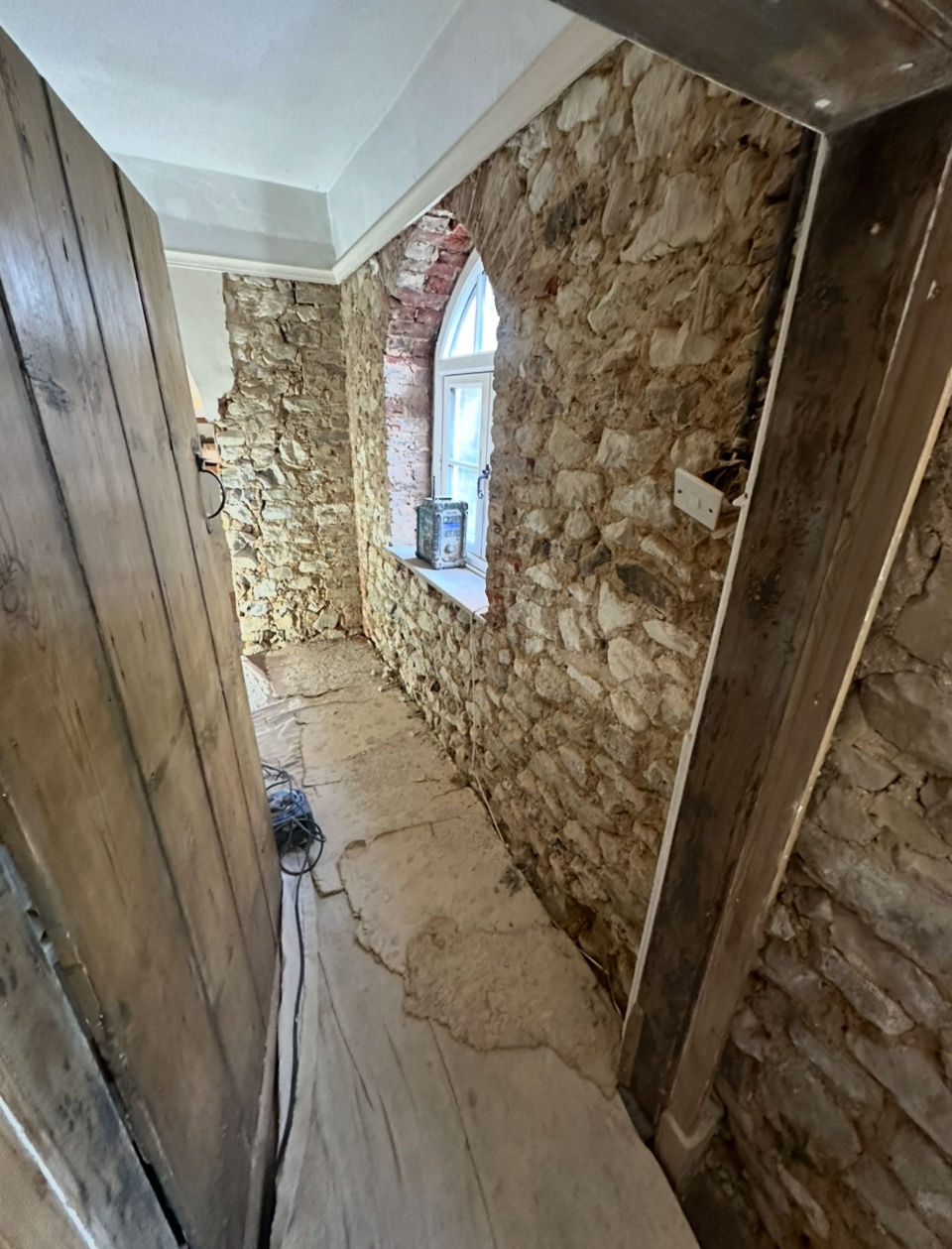
To tackle the rising damp, Gavin first stripped back the affected internal plaster to the recommended height above the last visible signs of damp and salt contamination. He then installed an appropriate chemical damp proof course into the masonry to create a new barrier against moisture travelling up from the ground.
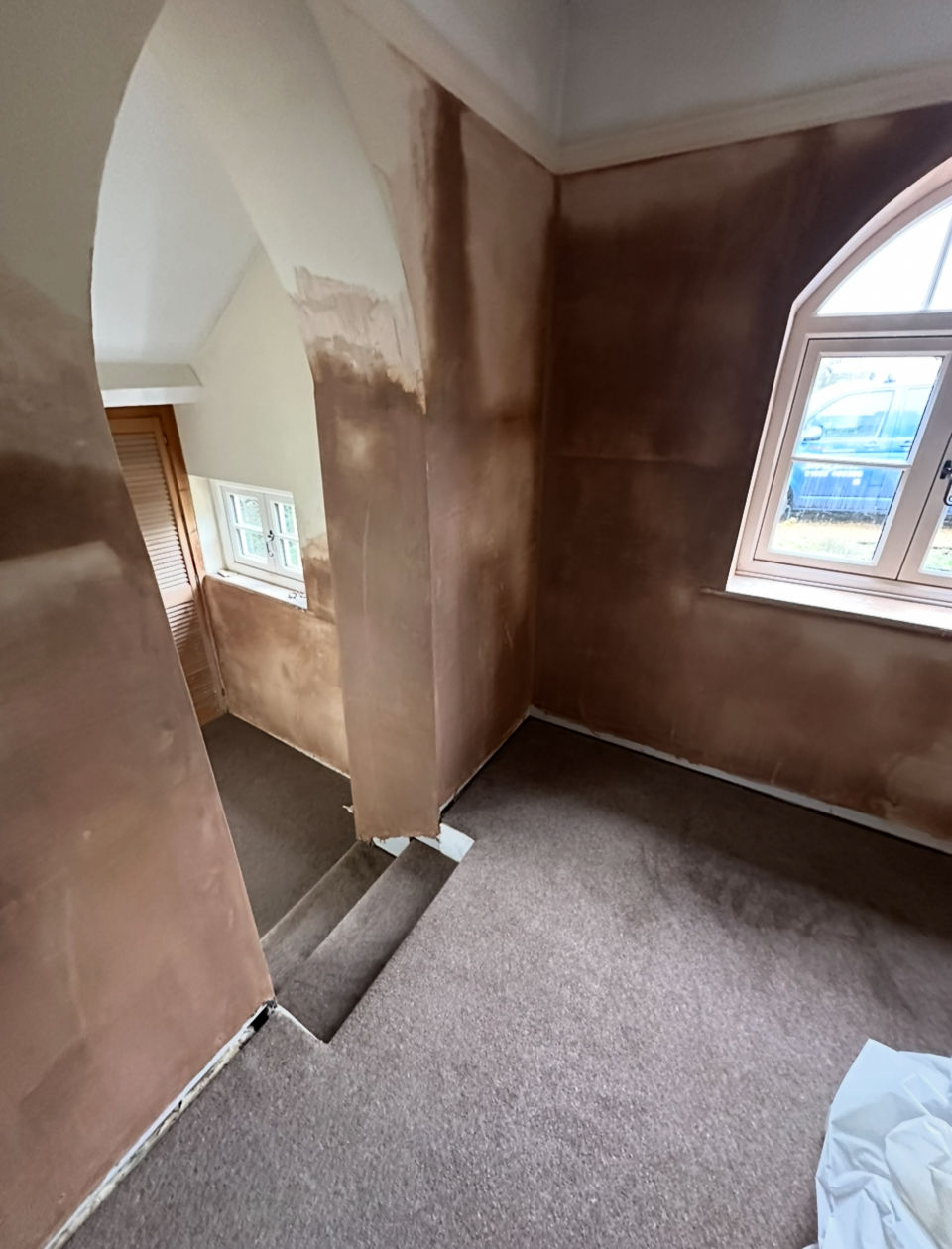
Once the damp proof course was in place, Gavin applied a specialist damp‑resistant render system, designed to control residual salts and provide a sound base for a smooth plaster finish. After curing times were observed, he completed the walls with high quality plastering to leave them ready for redecoration.
Treating Penetrating Damp
On the external wall affected by penetrating damp, Gavin addressed the underlying causes rather than just the symptoms. This included cutting out and repointing defective joints and repairing damaged areas of render or masonry so the wall could properly shed weather.
Where appropriate, a breathable masonry treatment was used to help reduce water penetration while still allowing the wall to release internal moisture. Internally, any blown plaster and salt‑contaminated areas related to the penetrating damp were removed and re‑plastered to match the rest of the room.
The Result
Once the work had fully dried, the homeowner reported that the walls remained dry, the musty odour had gone, and rooms felt noticeably warmer and more comfortable. The combination of a correctly installed damp proof course, salt‑resistant internal finishes, and targeted external repairs provided a long‑term solution rather than a cosmetic fix.





GJones Plastering & Damp Proofing draws on Gavin’s 25+ years of plastering experience and PCA‑qualified damp proofing expertise to diagnose and solve issues such as rising damp and penetrating damp in a thorough, methodical way. Homeowners with concerns about damp can arrange for Gavin to inspect the problem and recommend the most effective course of action for their property.
If you’re struggling with damp in your property, get in touch today to see how we can help restore your home.